

World Wildlife Day 2026
The University of Transdisciplinary Health Sciences and Technology (TDU) Calls for Action to Conserve Medicinal and Aromatic Plants for Health, Heritage and Livelihoods
World Wildlife Day 2026, under the United Nations theme “Medicinal and Aromatic Plants: Conserving Health, Heritage and Livelihoods,” reinforces a global message: conserving medicinal and aromatic plants is essential for biodiversity, public health, cultural continuity and sustainable development. This theme invites reflection on a powerful yet often overlooked truth - that our health, livelihoods and cultural heritage are deeply rooted in the living world around us, particularly in medicinal and aromatic plants.
Across the world, more than 80 percent of people depend on plant-based medicines for primary healthcare. In India, systems such as Ayurveda, Siddha and Unani, etc., along with countless local health traditions, rely on forest and farm biodiversity. Globally, more than 60,000 plant species are used for medicinal purposes, forming the backbone of traditional systems of medicine while also contributing significantly to modern pharmacology. Yet many medicinal plant species are now threatened by habitat loss, climate change, unsustainable harvesting and illegal trade. When these plants are lost, we lose not only species, but also traditional knowledge, healthcare options and livelihoods.
The University of Transdisciplinary Health Sciences and Technology (TDU), Bengaluru, is a State-legislated, not-for-profit research university with a societal mission focused on translating knowledge of medicinal plant diversity through the integration of foundational Ayurvedic principles - including Pancha Mahabhuta, Prakriti and Rasayana - with contemporary scientific frameworks. Through this approach, TDU has contributed - and continues to contribute - to human and animal health, sustainable livelihoods, cultural heritage preservation, nutrition security, ecological restoration and climate resilience, in alignment with global priorities on biodiversity conservation and sustainable development.
For over three decades, TDU has demonstrated that medicinal plants are not merely biological resources; they are living knowledge systems that connect forests, farms, communities and healthcare. We firmly believe that medicinal plant conservation - closely aligned with World Wildlife Day 2026 and the UN vision of living in harmony with nature - is not separate from development. Rather, it is central to designing nature-based solutions for rural livelihoods, ecological resilience and public health challenges, including malnutrition, metabolic disorders, antimicrobial resistance and cognitive decline.
Using a transdisciplinary and One Health approach, TDU advances an integrated continuum of action that begins with the conservation of wild medicinal plant gene pools through a national network of Medicinal Plants Conservation Areas (MPCAs), and the stewardship of India’s National Herbarium for Medicinal Plants, safeguarding bio-cultural knowledge and raw drug diversity. This conservation foundation is strengthened through evidence-based scientific validation of traditional formulations using phytochemistry, molecular biology, cell and animal models, alongside real-world clinical evidence generated through Ayurvedic hospital practice. Knowledge is further translated into functional foods, nutraceuticals and ethnoveterinary solutions that support both human and animal health. To ensure sustainability at scale, TDU promotes Good Agricultural and Collection Practices (GACP), reducing pressure on wild populations while ensuring quality, safety and traceability of herbal raw materials.
TDU also believes that communities are not threats to forests - they are their strongest guardians. At the community level, medicinal plant conservation is therefore linked with ethnoveterinary programmes, home herbal gardens, food forage forest plots and livelihood training initiatives, enabling sustainable incomes, reducing dependence on antibiotics in livestock, and improving health and nutrition outcomes across ecosystems and communities.
As the world prepares to observe World Wildlife Day 2026, TDU reaffirms its commitment and calls upon students, faculty, partners and the wider public to take collective action to protect medicinal plant diversity - as a foundation for, and a bridge between, public health, cultural heritage and sustainable livelihoods.
#WWD2026 #ForNature #ForPeople #MedicinalPlants #OneHealth #Biodiversity #TDU #FRLHherbarium #ENVIS #TDUBengaluru
Dr. Atul Kumar Gupta, IFS (Retd.)
Professor, NRM, WL, BD
TDU, Bengaluru
Acting Locally for Global Impact: Reimagining PBRs by Integrating Ecosystem Services
The theme of the International Day for Biological Diversity 2026—“Acting locally for global impact”—is a powerful reminder that global ecological security relies fundamentally on local ecosystems.
Read more
International Day of Forests 2026
Forests are not just natural assets - they are economic lifelines and knowledge systems. Nurturing them is essential for a sustainable and prosperous future for people and planet
Read more
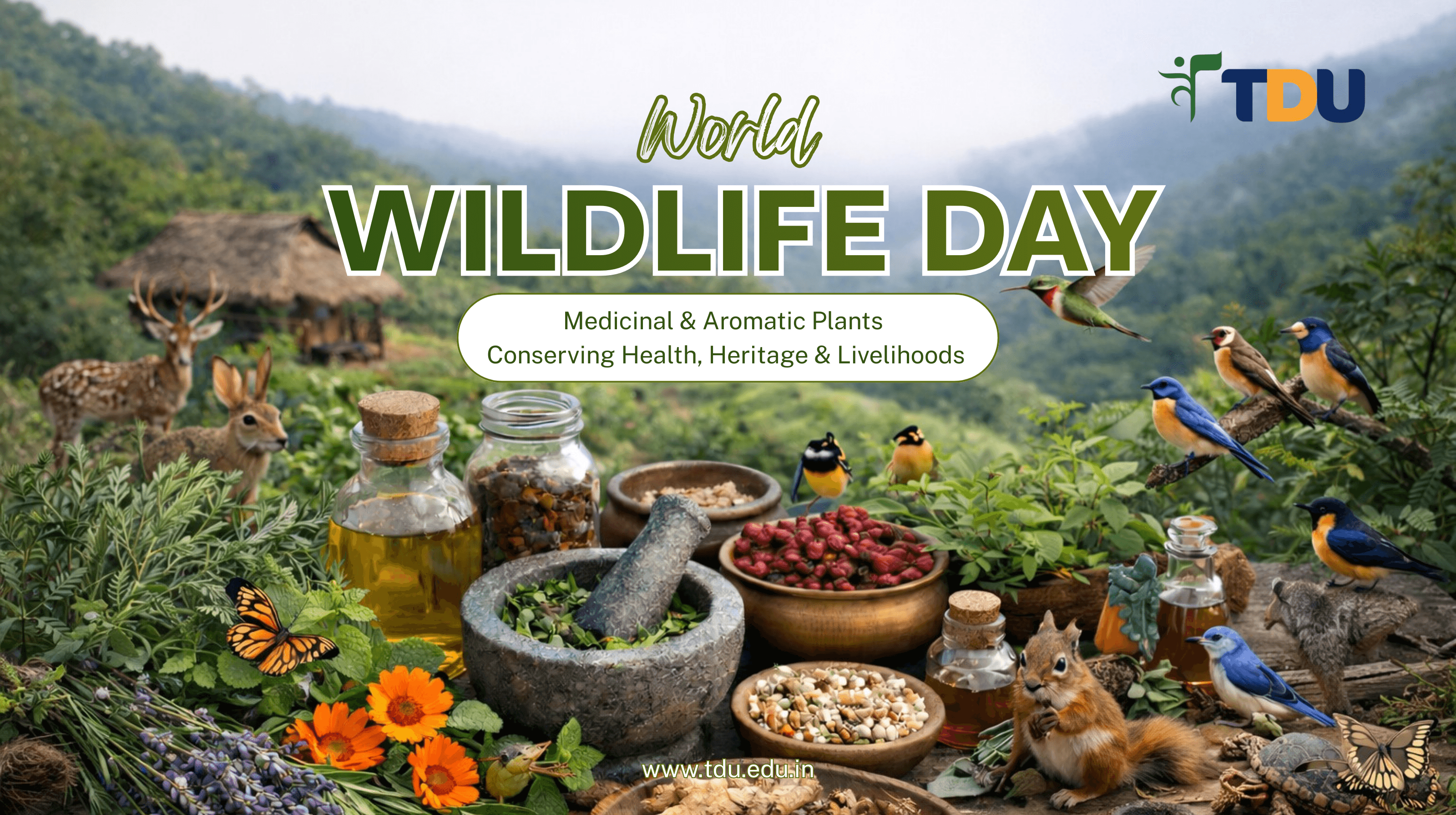
World Wildlife Day 2026
The University of Transdisciplinary Health Sciences and Technology (TDU) Calls for Action to Conserve Medicinal and Aromatic Plants for Health, Heritage and Livelihoods
Read more
Wetlands, Traditional Knowledge and Health : A TDU - FRLHT Perspective
Wetlands are dynamic ecosystems where water meets land, creating rich habitats that support biodiversity, water security, climate resilience and cultural heritage. Observed annually on 2 February, World Wetlands Day commemorates the adoption of the Ramsar Convention (1971) and underscores the essential role wetlands play for both nature and people worldwide.
Read more
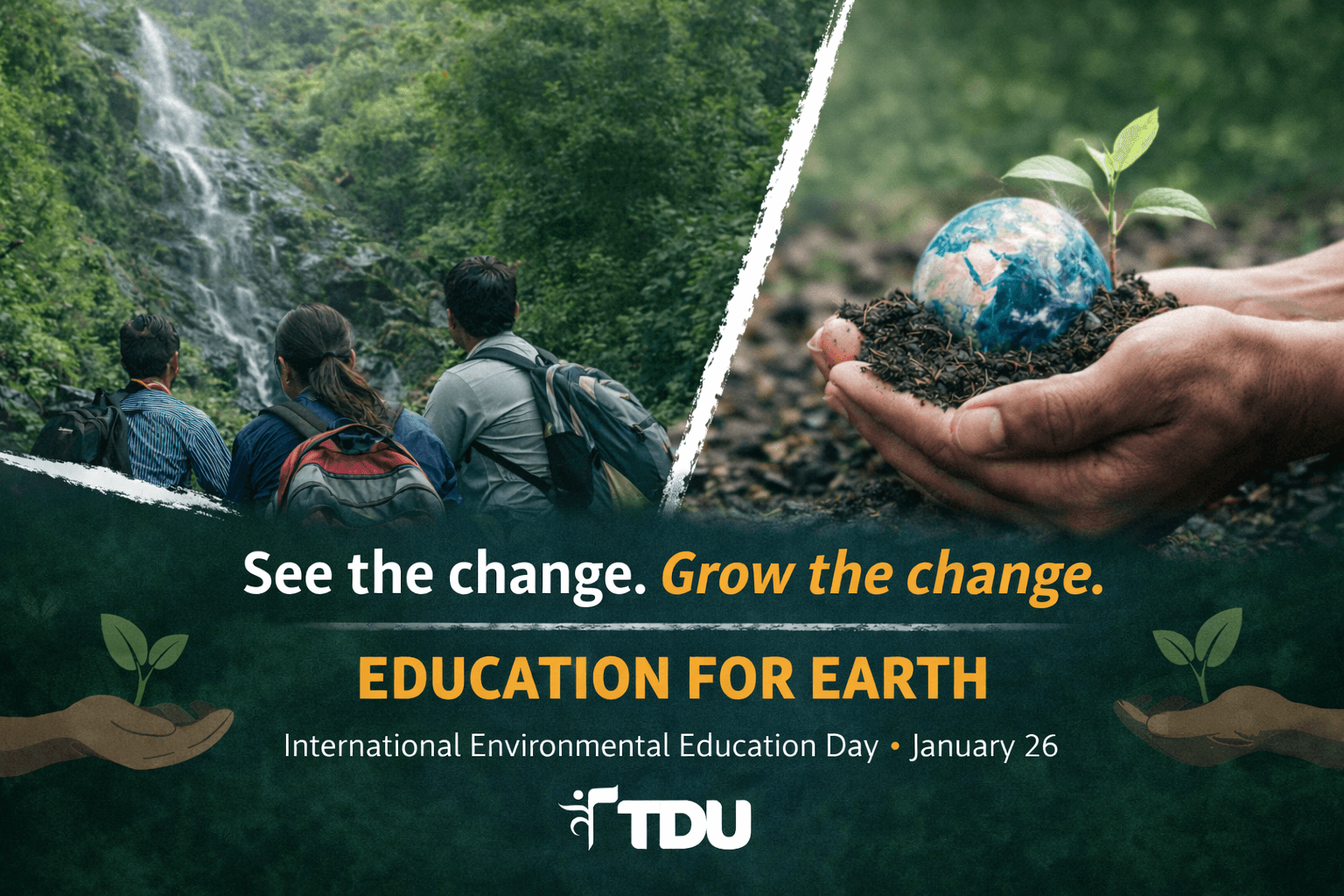
International Environmental Education Day (January 26)
On International Environmental Education Day (January 26), we are reminded of a powerful truth: The future of our planet depends on what and how we teach today.
Read more

TDU VC Darshan Shankar pays tribute to Prof. Madhav Gadgil
Read more
