

International Day of Forests 2026
Forests are not just natural assets - they are economic lifelines and knowledge systems. Nurturing them is essential for a sustainable and prosperous future for people and planet
International Day of Forests 2026
1. Theme: Forests and Economies
The theme of International Day of Forests 2026 - “Forests and Economies,” led by the Food and Agriculture Organization, highlights a powerful and timely insight: forests are not just ecological assets, but the foundation of economic prosperity, human health, and sustainable development. They generate livelihoods, create employment, provide renewable raw materials, and support a growing bioeconomy that offers viable alternatives to carbon-intensive systems. At the same time, forests sustain critical ecosystem services - water security, soil health, climate regulation, biodiversity conservation, and agricultural productivity.
At the University of Transdisciplinary Health Sciences and Technology (TDU), Bengaluru, this vision is deeply embedded and has been actively demonstrated for over three decades, building on the pioneering work of Foundation for Revitalisation of Local Health Traditions (FRLHT). Established in 2013, TDU advances a transdisciplinary approach that integrates Ayurveda, ecology, natural sciences, social sciences, and technology to design socially relevant, nature-based solutions.
At its core, TDU’s mission is to revitalize India’s community-rooted health knowledge systems by creating a scientifically informed interface between traditional knowledge and modern science. This approach enables the development of context-specific solutions that connect forest conservation with human and animal health, sustainable livelihoods, and long-term ecological resilience, demonstrating how forests can serve as both life-support systems and engines of inclusive, sustainable economies.
2. Forests as Health-Economy and Knowledge Systems
TDU’s work is grounded in the understanding that forests are both living health-economy systems and knowledge systems, where biodiversity - especially medicinal and food (wild - neglected and underutilized) plants - sustains healthcare, nutrition, livelihoods, and cultural knowledge. Through a nationwide network of 108 Medicinal Plants Conservation Areas (MPCAs), developed in partnership with State Forest Departments, TDU has helped establish one of the world’s largest in-situ conservation initiatives. This effort secures wild gene pools while strengthening ecosystem resilience and safeguarding bio-cultural knowledge embedded in these landscapes.
By viewing forests not merely as resources but as dynamic repositories of knowledge and economic value, TDU demonstrates that conserving medicinal plant diversity directly supports traditional healthcare systems, emerging nature-based industries, and long-term ecological and economic sustainability.
3. From Conservation to Bioeconomy
A key contribution of TDU lies in translating biodiversity conservation into sustainable economic opportunities through a continuum of science, knowledge systems, and practice. This includes the development of a nationally significant herbarium and taxonomic facility, along with multi-disciplinary databases and digital knowledge platforms that support research, education, and community outreach.
Building on this foundation, TDU advances research in Ayurveda Biology - spanning cognition, metabolic health, nutrition, food futures, and genomics - alongside the evidence-based validation of traditional formulations.
These efforts are translated into functional foods, nutraceuticals, and plant-based innovations, while also strengthening sustainable value chains for medicinal and food plants. Through the promotion of sustainable harvesting Practices of key medicinal plant species, TDU aims at reducing pressure on wild populations and ensure quality, safety, and traceability of raw materials.
Together, these initiatives contribute to a responsible and inclusive bioeconomy, where forest resources generate value while maintaining ecological integrity and long-term sustainability.
4. Community-Centred Forest Economies
A defining strength of TDU is its focus on community-linked knowledge systems. By revitalising Local Health Traditions and ethnoveterinary practices, TDU connects forests directly to rural economies and well-being. Its programmes support:
Food forage forest systems and Home herbal gardens.
Training in ecosystem-specific nutrition and healthcare
Sustainable livelihoods based on medicinal plants
Reduced dependence on external inputs, including antibiotics in livestock
This approach reinforces the idea that local communities are co-creators of sustainable forest economies.
5. Science, Education and Practice
TDU’s impact is strengthened through its integrated education and clinical research ecosystem:
A 100-bed healthcare research centre serving ~50,000 people annually
Transdisciplinary education programs spanning students, healers, farmers, and professionals
Research that bridges traditional knowledge with modern science for real-world applications
6. Education and Co-existence
Through innovative educational programs and co-existence initiatives, TDU trains a diverse group of stakeholders - from students and forest officers to community healers and entrepreneurs - fostering a new generation committed to sustainable forest management and nature-based solutions.
7. A Way Forward
The message of “Forests and Economies” is clear: economic growth and ecological sustainability must go hand in hand. TDU’s work shows that when traditional knowledge is revitalized and integrated with modern science, forests can become engines of health, livelihoods, and climate resilience.
On this International Day of Forests 2026, we at TDU, calls for collective action to:
Recognize forests as foundations of health and economic well-being
Invest in medicinal plant conservation and sustainable value chains
Promote community-led, knowledge-driven forest economies
Build bioeconomy pathways rooted in biodiversity and tradition
Dr. Atul Kumar Gupta, IFS (Retd.)
Professor, NRM, WL, BD
TDU, Bengaluru
International Day of Forests 2026
Forests are not just natural assets - they are economic lifelines and knowledge systems. Nurturing them is essential for a sustainable and prosperous future for people and planet
Read more
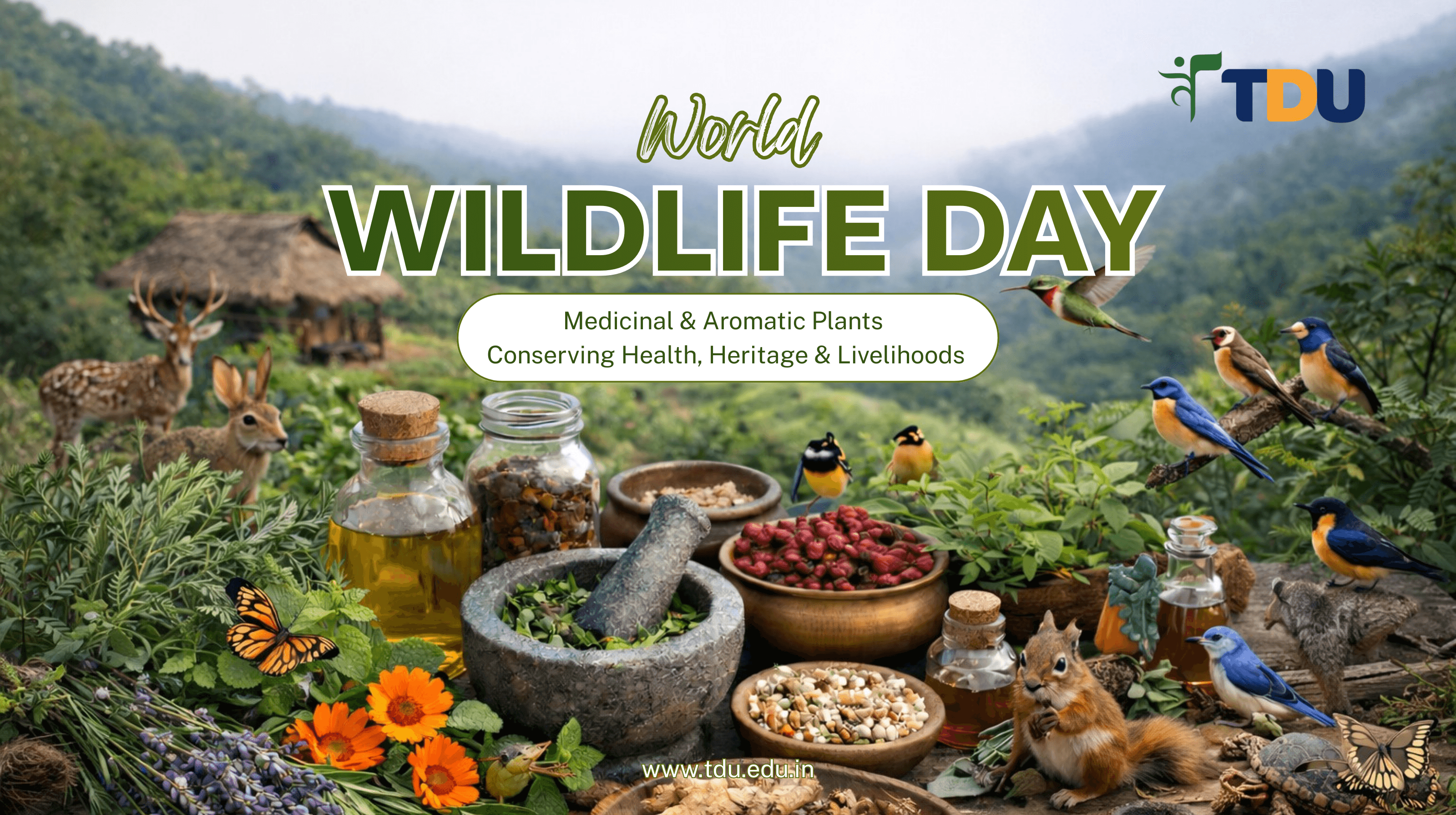
World Wildlife Day 2026
The University of Transdisciplinary Health Sciences and Technology (TDU) Calls for Action to Conserve Medicinal and Aromatic Plants for Health, Heritage and Livelihoods
Read more
Wetlands, Traditional Knowledge and Health : A TDU - FRLHT Perspective
Wetlands are dynamic ecosystems where water meets land, creating rich habitats that support biodiversity, water security, climate resilience and cultural heritage. Observed annually on 2 February, World Wetlands Day commemorates the adoption of the Ramsar Convention (1971) and underscores the essential role wetlands play for both nature and people worldwide.
Read more
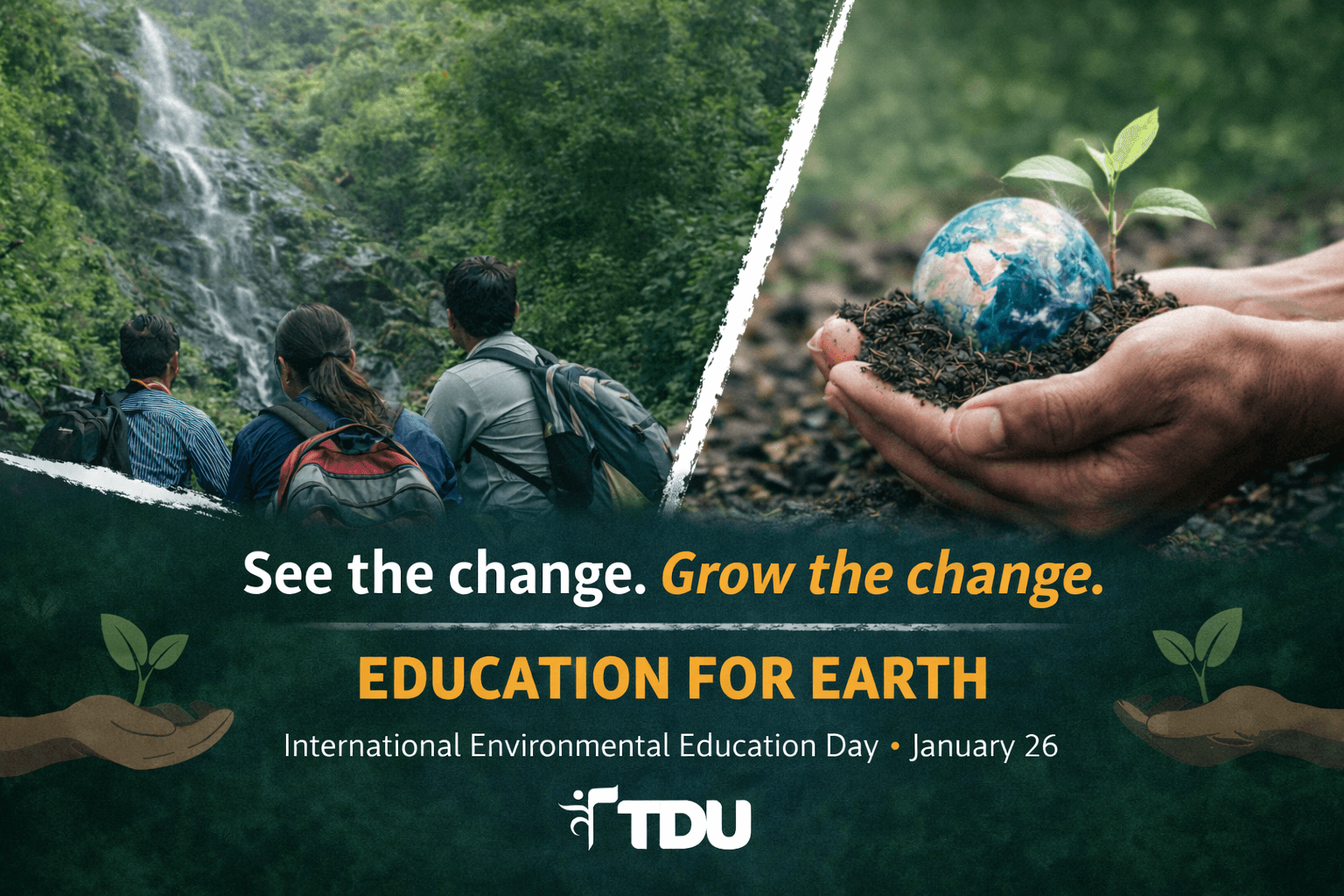
International Environmental Education Day (January 26)
On International Environmental Education Day (January 26), we are reminded of a powerful truth: The future of our planet depends on what and how we teach today.
Read more

TDU VC Darshan Shankar pays tribute to Prof. Madhav Gadgil
Read more

Rethinking Periods: When Did Rest Become Restriction ?
Menstruation is one of the most natural processes of the female human body, yet it remains one of the most misunderstood. Across cultures-especially in India-it has been surrounded by silence, shame, and countless restrictions.
Read more
