

The New age Vaidya’s Paricāraka - Employing AI to assist
How artificial intelligence is stepping into the timeless role of the Paricāraka to support students, physicians, and researchers
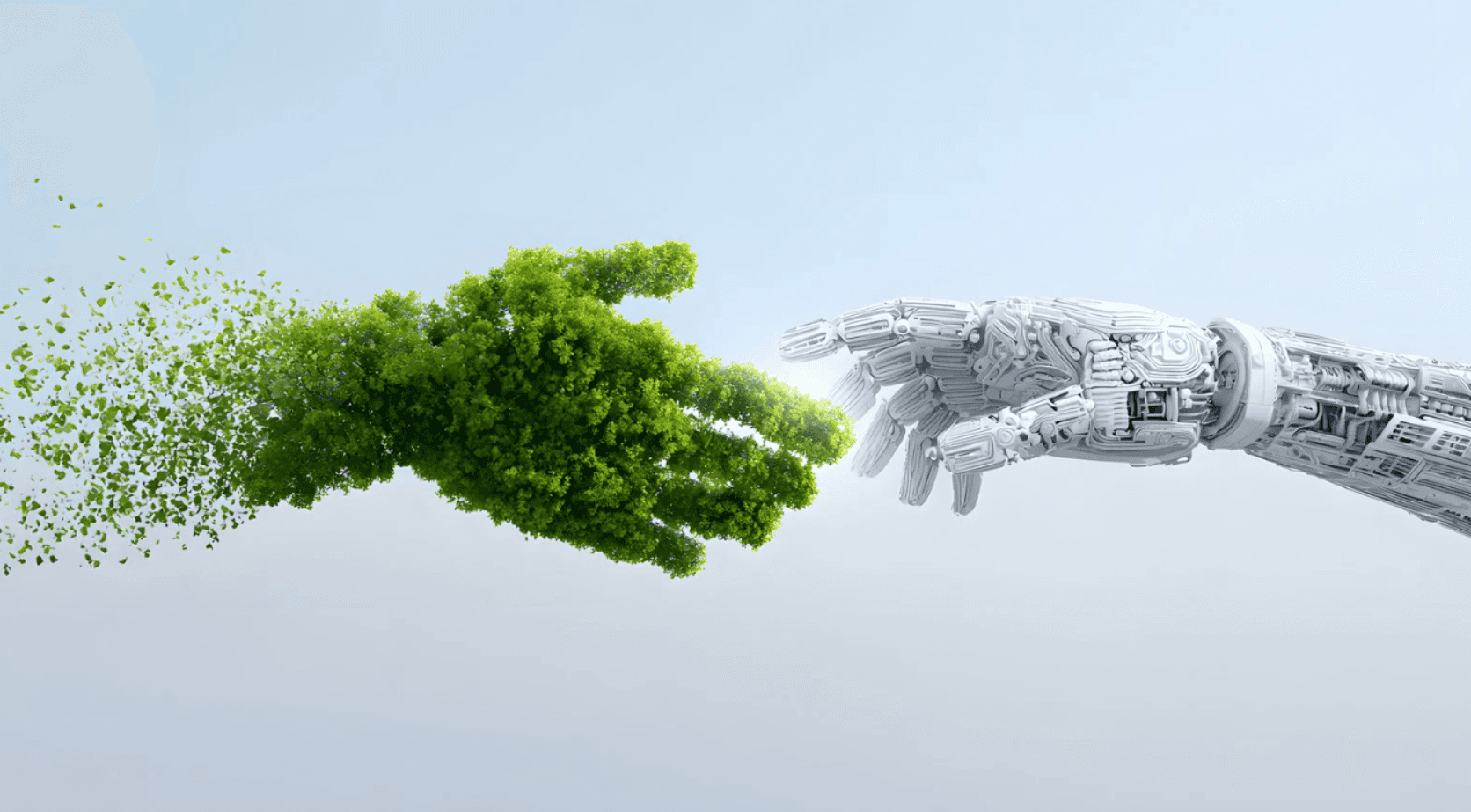
For centuries, the Vaidya - the traditional Ayurvedic physician - was never alone in the noble task of healing. Alongside them stood the Paricāraka, a trusted assistant whose role went far beyond mere support. The Paricāraka noted symptoms, prepared medicines, comforted patients, and ensured that the Vaidya could focus on healing with wisdom and compassion. This partnership is beautifully captured in the Ayurvedic framework of pāda catuṣṭaya—the four essential pillars of healing—where the Paricāraka or upasthāta holds the third position.
Today, as the world steps into an era driven by digital tools, a new kind of assistant is emerging. Artificial Intelligence (AI) is quietly assuming the role of the modern Paricāraka. Not as a replacement for human knowledge or judgment, but as a powerful partner that can organize information, process vast data, and provide meaningful support in learning, research, and clinical practice.
Why AI as Paricāraka?
Ayurveda is vast and layered. The classical texts contain thousands of verses—spanning daily routines, dietetics, seasonal regimens, therapies, and the management of intricate diseases. In parallel, modern medical science is producing an ever-expanding ocean of research. To expect one individual to hold and apply all this knowledge in real time is nearly impossible.
Classical Ayurveda describes the qualities of an ideal Paricāraka :
Upacāragṇata – perfectly trained in nursing
Ajugupso – tolerant and patient
Balavān – physically and mentally strong
Yukto vyādhita rakṣaṇe – deeply committed to patient care
Vaidya-vākya-kṛtaḥ – obedient to the physician’s instructions
In the same spirit, AI works quietly in the background—processing, assisting, and enabling—while leaving the essence of healing in the hands of the Vaidya. The modern Paricāraka may speak in codes and data, but its purpose remains the same: service and support in the art of healing.
This is precisely where AI demonstrates its strength. Just as the traditional Paricāraka assisted the Vaidya in sifting herbs, preparing oils, or recording patient details, AI today assists us in sifting through information—organizing, simplifying, and presenting it in usable formats.
I did rely on AI for rapid literature reviews, molecular docking studies, or complex data analysis—reducing work that once took months into a matter of days.
Back in my clinic, AI is my marketing assistant, inventory manager and appointment reminder as well.
In essence, AI is stepping into the same quiet, enabling role the Paricāraka once played—ensuring the Vaidya’s core task of healing remains at the center.
My Personal Journey with AI
When I began my journey as a Vaidya-in-training, I regarded AI as just another technological buzzword. But gradually, it became an unexpected companion—guiding me in learning, research, and even patient education. As a student, I used chatgpt and gemini as my study partners which would prompt me with relevant questions, teach me bite sized info along with mnemonics to remember important information. Comparative studies in the labs became hassle free. Keeping track of assignments, lectures and read-ons for later times, crafting feasible plan of actions like a smart sidekick.
In a collab project, I was drafting scripts for animated health awareness videos - dengue, I used to run it by AI to get a clear, patient-friendly script that conveyed medical concepts in layman terms.
Academic projects—like exploring concepts from both Ayurvedic and biomedical perspectives, AI helped me put in my ideas and compare sources for an integrative approach.In research planning, while examining podocyte injury in nephrotic syndrome, AI assisted me in framing F-I-N-E-R (Feasible, Interesting, Novel, Ethical, Relevant) research questions and structuring proposals.
Even in daily logistics, AI became an inevitable companion. With my schedule split between long clinic hours, college classes, and family responsibilities, AI was my robin planning out strategies. During my long commutes, AI tools like illuminate transformed wasted hours into productive time by simplifying scientific papers and reading them aloud, while conversational platforms answered my queries instantly.
In all these instances, AI did not do the work for me. Instead, it acted like a diligent assistant—offering drafts, organizing information, and nudging me towards clarity. Much like the Paricāraka of old times, it freed me to focus on the essence of the task: thinking, reflecting, and healing.
What This Means for the Future
The future of Ayurveda should not be framed as a tug-of-war between tradition and technology. Instead, it must be seen as a partnership. Imagine a clinic where the physician listens deeply to the patient, while an AI system instantly cross-references symptoms with both classical Ayurvedic texts and modern biomedical research. Imagine a classroom where students simulate disease pathways on AI platforms and instantly visualize how Ayurvedic interventions might alter those pathways.
These possibilities do not diminish the Vaidya. They empower the Vaidya, giving them more time to engage in sevā - serving humanity while the digital Paricāraka takes care of the repetitive, data-heavy tasks.
A Word of Caution
Yet, as with any tool, AI must be approached with wisdom. It can assist, but it cannot replace the judgment, empathy, and lived wisdom of a physician. Ayurveda is not merely about data or algorithms—it is about context, individuality, and balance. AI may highlight statistical trends, but only a Vaidya can truly understand the pulse of a patient—both literally and metaphorically.
The challenge before us is not whether to use AI, but how to use it wisely, ethically, and creatively. Because when tradition and technology walk hand in hand, can a vaidya be empowered in a real sense.
Author :
Dr. Shamaa K
Acting Locally for Global Impact: Reimagining PBRs by Integrating Ecosystem Services
The theme of the International Day for Biological Diversity 2026—“Acting locally for global impact”—is a powerful reminder that global ecological security relies fundamentally on local ecosystems.
Read more
International Day of Forests 2026
Forests are not just natural assets - they are economic lifelines and knowledge systems. Nurturing them is essential for a sustainable and prosperous future for people and planet
Read more
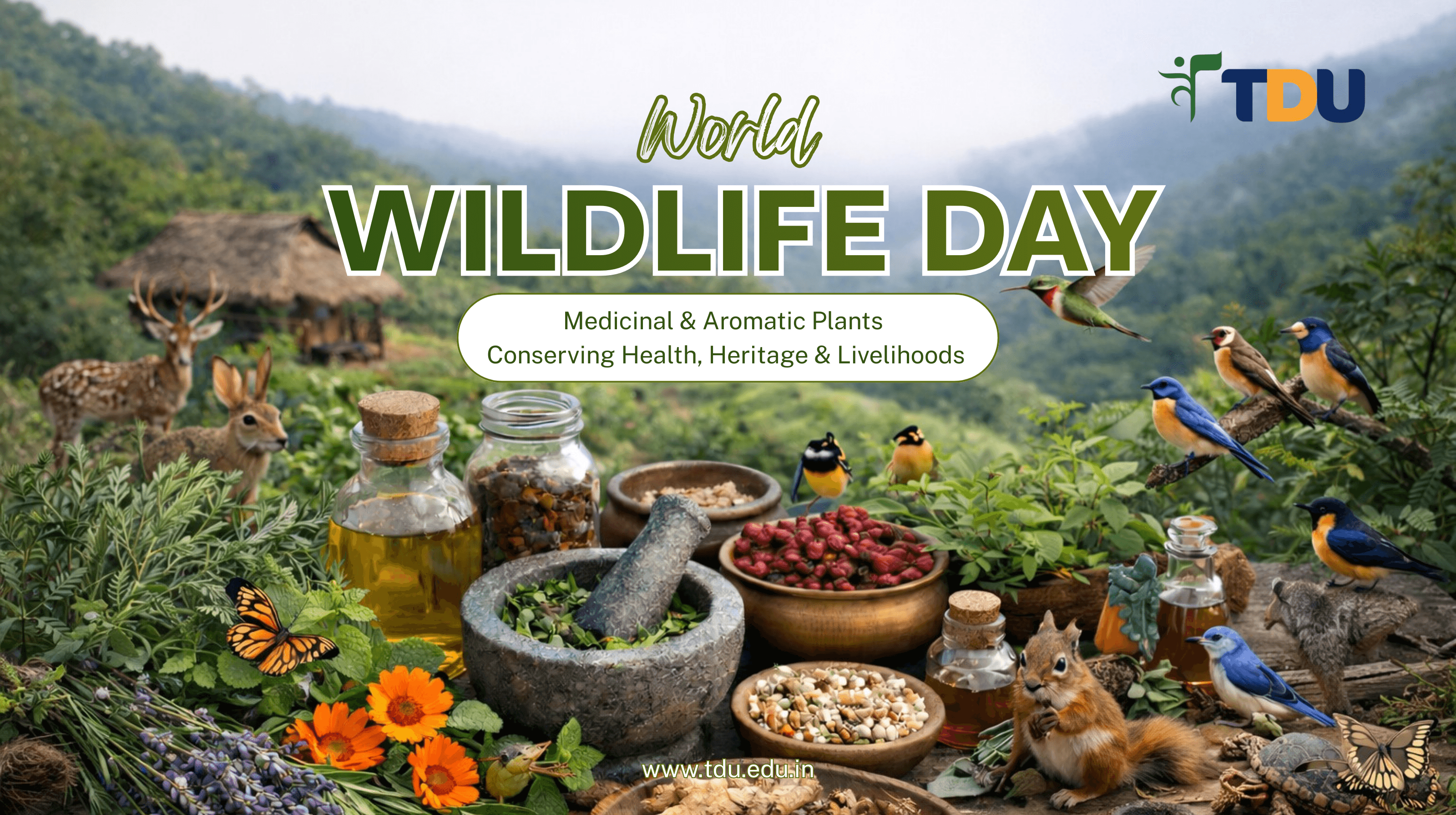
World Wildlife Day 2026
The University of Transdisciplinary Health Sciences and Technology (TDU) Calls for Action to Conserve Medicinal and Aromatic Plants for Health, Heritage and Livelihoods
Read more
Wetlands, Traditional Knowledge and Health : A TDU - FRLHT Perspective
Wetlands are dynamic ecosystems where water meets land, creating rich habitats that support biodiversity, water security, climate resilience and cultural heritage. Observed annually on 2 February, World Wetlands Day commemorates the adoption of the Ramsar Convention (1971) and underscores the essential role wetlands play for both nature and people worldwide.
Read more
International Environmental Education Day (January 26)
On International Environmental Education Day (January 26), we are reminded of a powerful truth: The future of our planet depends on what and how we teach today.
Read more
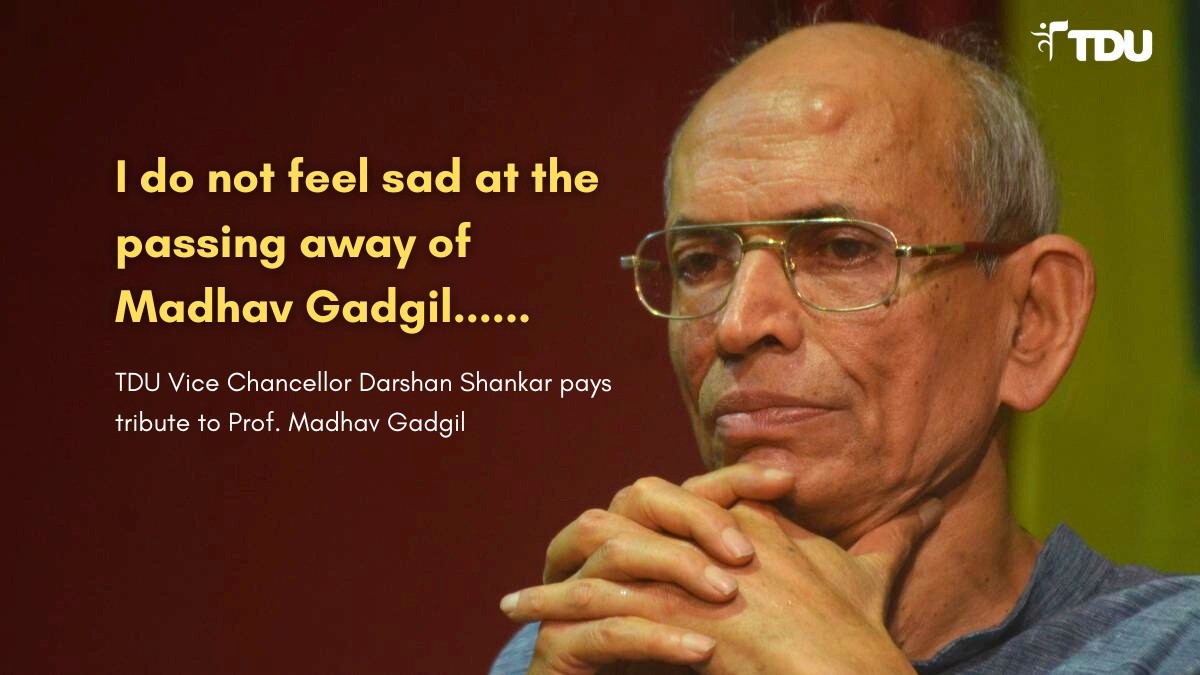
TDU VC Darshan Shankar pays tribute to Prof. Madhav Gadgil
Read more
