

Food Forage Forests: A Baby Step Toward Harmony with Nature and Sustainable Development
On the occasion of the International Day for Biological Diversity, observed every year on 22nd May, the University of Trans-disciplinary Health Sciences and Technology(TDU), Bengaluru reaffirms its commitment to ecological restoration and sustainable living through a grassroots initiative—Food Forage Forest Plots(FFFPs). This year’s global theme, “Harmony with Nature and Sustainable Development,” finds local resonance in this small but impactful effort, launched with support from the Rural India Support Trust (RIST)under a Food Future-focused project, led by Dr. Gurmeet Singh, Professor, TDU.
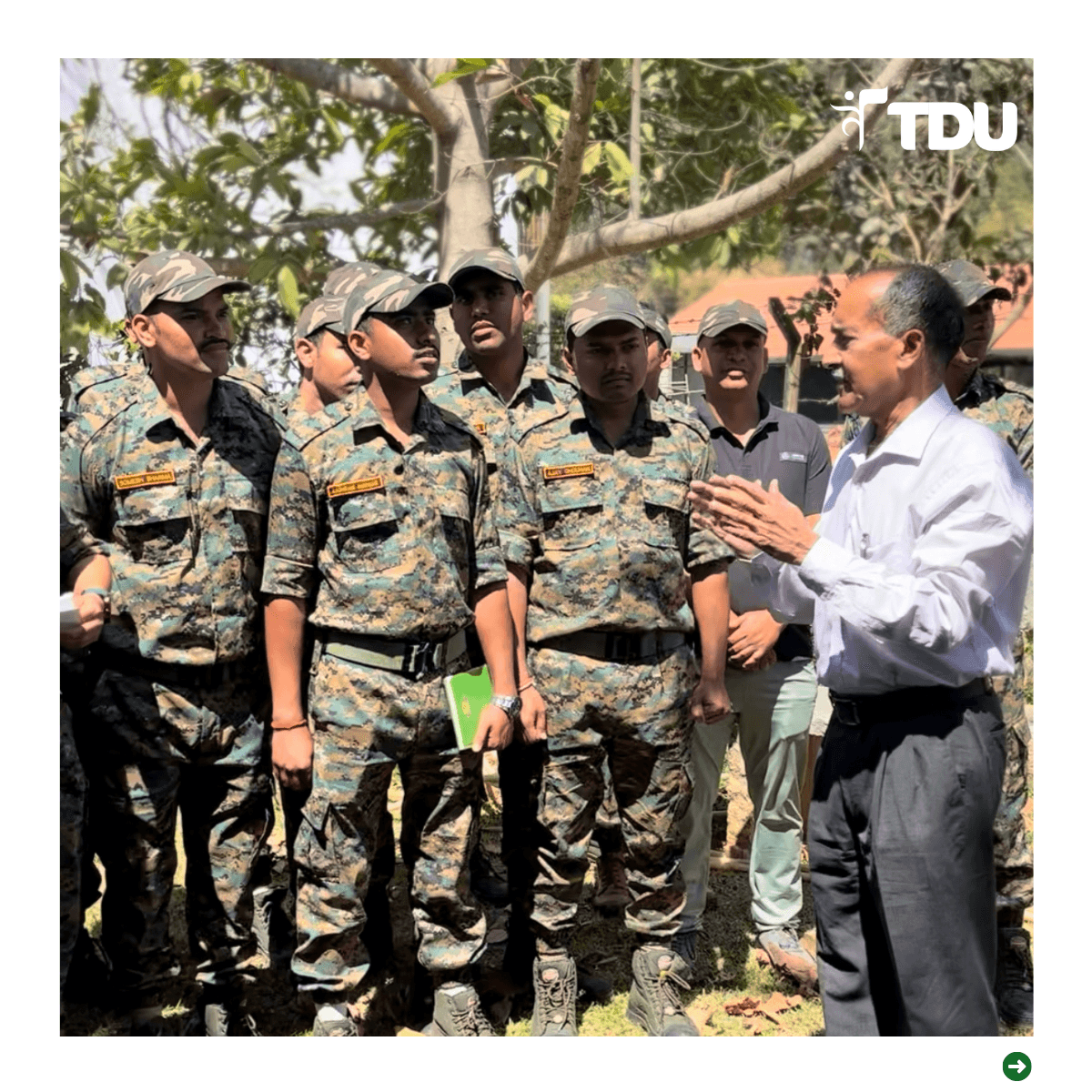
The concept of FFFPs is built on the idea that biodiversity can flourish even incompact spaces, as small as 5,000 square feet. These 5,000 square feet plots—are modelled on the structure and function of natural forests, with seven-layered plant diversity that mimics wild habitats. Each plot integrates a wide array of native and local species—leafy greens, fruits, flowers, shoots, and medicinal herbs—chosen for their ecological roles, nutritional value, and cultural relevance..
One of the most inspiring aspects of this initiative is the revival of classical and traditional recipes using sustainably harvested wild species. These traditional preparations offer a healthy and culturally grounded response to a growing concern: the deficit of phytonutrients in modern diets dominated by commercially farmed products. By reintroducing wild edibles into our food plates, FFFPs promote nutritional diversity, community health, and cultural continuity.
“Today, our food plate is dominated by a narrow range of farmed products, often lacking in vital phytonutrients,” says Dr. Gurmeet, Project PI. “These wild greens, when integrated into diets through age-old recipes, add much-needed diversity and nutrition while celebrating our traditional knowledge systems.”
In urban areas, these micro-forest-ecosystems act as green lungs—cooling cityscapes, enriching biodiversity, and offering city dwellers a sensory connection to wild. In rural contexts, they support agroecological resilience, safeguard indigenous knowledge and enhancing ecosystem services such as soil health, pollination, and water retention.
But FFFPs go beyond ecological and nutritional value. They are living classrooms and community hubs—spaces where farmers, youth, students, nature enthusiasts, and tourists come together to co-create knowledge, share skills, and celebrate biodiversity. By blending science and tradition, the initiative fosters a participatory approach to sustainable development
“These Food Forage Forests reflect the essence of the Biodiversity Day 2025 theme. They’re small steps with a global vision—bringing together biodiversity, sustainability, health, heritage, and harmony with the nature on the same plate,” says Dr. Gupta, coordinating this FFFP theme from TDU.
As the world strives to implement the Kunming-Montreal Global Biodiversity Framework, TDU’s FFFPs offer a scalable, inclusive, and community-driven model for transformative change. They remind us that the path to biodiversity conservation begins right where we are—in our backyards, farms, schools, and kitchens.
This is a baby step with a big vision—to inspire a future where living in harmony with nature is not an abstract goal but a lived, local reality. TDU’s effort is a shining example of how small-scale, community-rooted actions can reflect and reinforce global commitments to biodiversity and sustainability.
Let us rewild our plates, restore our lands, and rethink our future—one forage forest at a time.
FFFP Team,(Dr. Gurmeet Singh, Dr. A. K. Gupta**, Dr. Tabassum, Dr. Shridevi Gothe, Dr.Shilpa Naveen, Ms. Sharanya, Ms. Kousthubha)
**akgupta@tdu.edu.in; akphayri@gmail.com.
Acting Locally for Global Impact: Reimagining PBRs by Integrating Ecosystem Services
The theme of the International Day for Biological Diversity 2026—“Acting locally for global impact”—is a powerful reminder that global ecological security relies fundamentally on local ecosystems.
Read more
International Day of Forests 2026
Forests are not just natural assets - they are economic lifelines and knowledge systems. Nurturing them is essential for a sustainable and prosperous future for people and planet
Read more
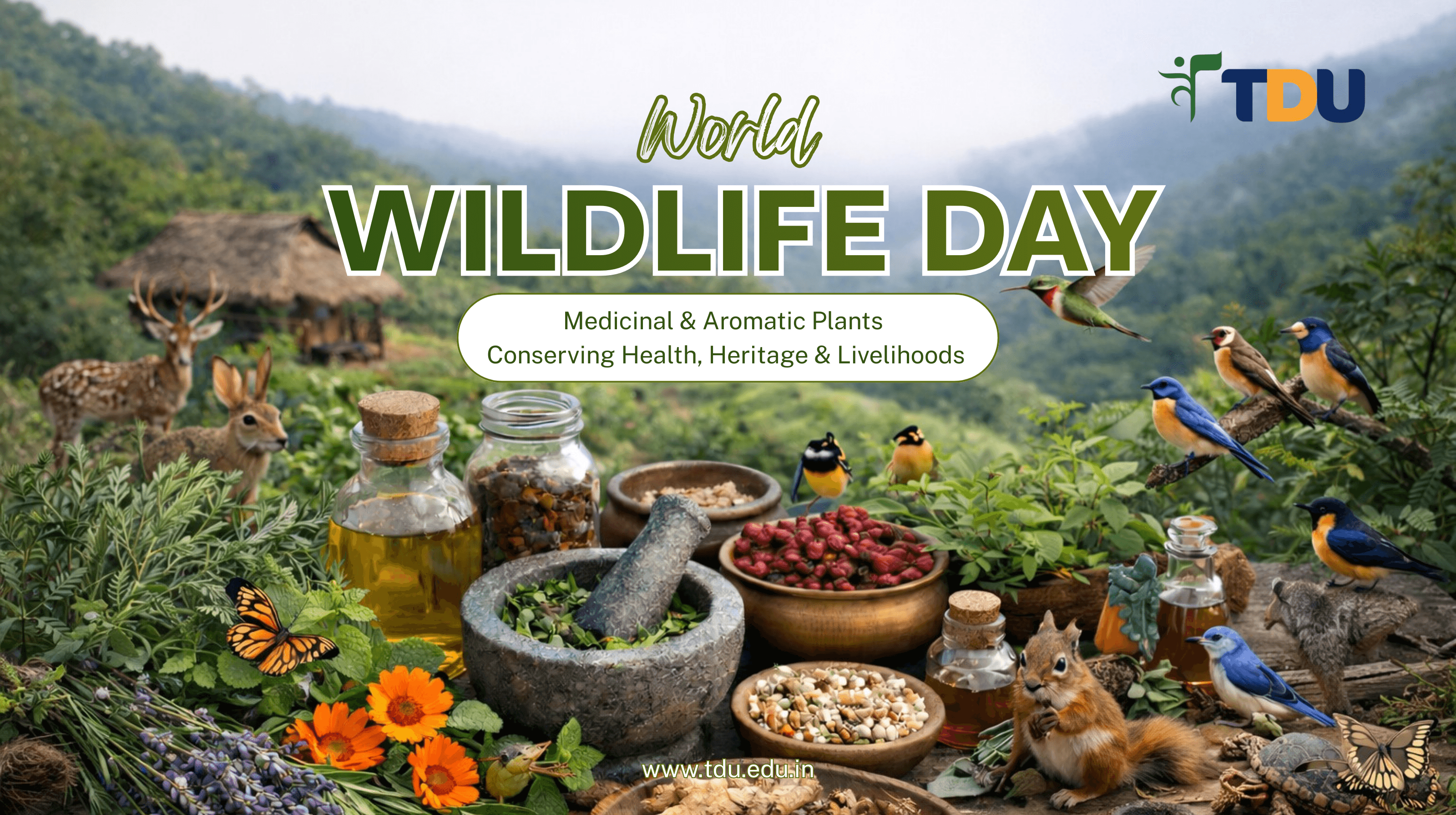
World Wildlife Day 2026
The University of Transdisciplinary Health Sciences and Technology (TDU) Calls for Action to Conserve Medicinal and Aromatic Plants for Health, Heritage and Livelihoods
Read more
Wetlands, Traditional Knowledge and Health : A TDU - FRLHT Perspective
Wetlands are dynamic ecosystems where water meets land, creating rich habitats that support biodiversity, water security, climate resilience and cultural heritage. Observed annually on 2 February, World Wetlands Day commemorates the adoption of the Ramsar Convention (1971) and underscores the essential role wetlands play for both nature and people worldwide.
Read more
International Environmental Education Day (January 26)
On International Environmental Education Day (January 26), we are reminded of a powerful truth: The future of our planet depends on what and how we teach today.
Read more

TDU VC Darshan Shankar pays tribute to Prof. Madhav Gadgil
Read more
