

What real-world evidence says about Ayurveda
“From clinical records to community care: using real-world evidence in Ayurveda”

Dr Prasan Shankar and team undertook an analysis of clinical outcomes of patients presenting at I-AIM Healthcare Centre, Bangalore. This was published in Frontiers in Medicine.
Read more from the authors of the publication:
What was the specific aim of the study?
We wanted to show that the records we already create in routine practice, things like consultations, follow-ups, lab values and outcome scores, can be organised into credible real-world evidence. And we wanted to prove it across five quite different conditions rather than one: supportive cancer care, oral mucositis, psoriasis, diabetes and infertility. Each one captures a different type of outcome, so if the method worked across all five, there was good reason to think it would work more widely.
What motivated this study?
There has always been a gap between how a treatment performs in a controlled trial and how it actually behaves in day-to-day clinical life. Ayurveda is individualised by nature. Two patients with the same diagnosis rarely receive the same prescription, and that fits poorly inside a conventional randomised trial. We felt its real-world effectiveness could still be measured honestly, using the data we already collect.
What are the key observations?
Across all five areas, the routine records held up well.
In supportive cancer care, symptom burden dropped by about 48 percent and pain by 45 percent.
In oral mucositis, 57 percent of patients on our Ayurveda gargle regimen had fully recovered by week three, compared with none in the comparison group.
In psoriasis, 92 percent of patients reported a better quality of life.
In diabetes it was 85 percent of patients reported a better quality of life, along with lower blood sugar and HbA1c.
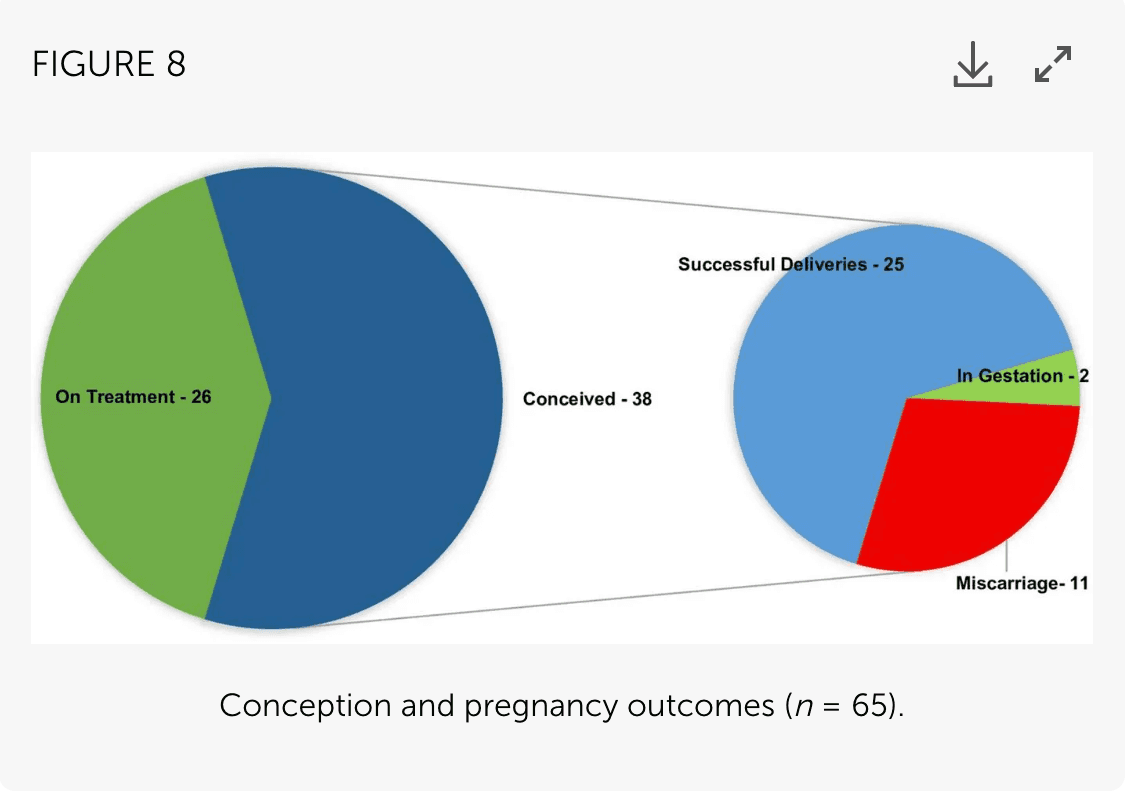
In the fertility group, 58 percent of women conceived over an average of six months, and 25 have since had healthy babies.
What were the publication challenges?
Chiefly the data. Records from everyday care vary a lot in how things get noted and how long patients are followed, so much of the work went into making them complete and consistent enough to analyse. We also had to present Ayurvedic care faithfully, without squeezing its individualised approach into a format that misrepresents it.
How does this help hospitals, and why is the EHR/EMR data so important?
It changes what a health record is for. Kept properly, an EHR becomes something the hospital can learn from, not just a file we fill in. Every documented visit adds to a dataset that improves the care we give and lets us talk about Ayurveda using our own numbers. That only works if the data are complete, structured and followed over time.
How will this help Ayurveda?
Pool records like these across many clinics and hospitals, study them properly, and Ayurveda gains an evidence base built from real practice rather than from a handful of trials. That is the kind of evidence clinicians, researchers, policymakers and patients can all make sense of.
These are observational findings and still need testing in larger, prospective studies. But the case for documenting well is hard to argue with.
📄 Read the paper: From clinical records to community care: using real-world evidence in Ayurveda
https://doi.org/10.3389/fmed.2026.1895750
Acting Locally for Global Impact: Reimagining PBRs by Integrating Ecosystem Services
The theme of the International Day for Biological Diversity 2026—“Acting locally for global impact”—is a powerful reminder that global ecological security relies fundamentally on local ecosystems.
Read more
International Day of Forests 2026
Forests are not just natural assets - they are economic lifelines and knowledge systems. Nurturing them is essential for a sustainable and prosperous future for people and planet
Read more
World Wildlife Day 2026
The University of Transdisciplinary Health Sciences and Technology (TDU) Calls for Action to Conserve Medicinal and Aromatic Plants for Health, Heritage and Livelihoods
Read more
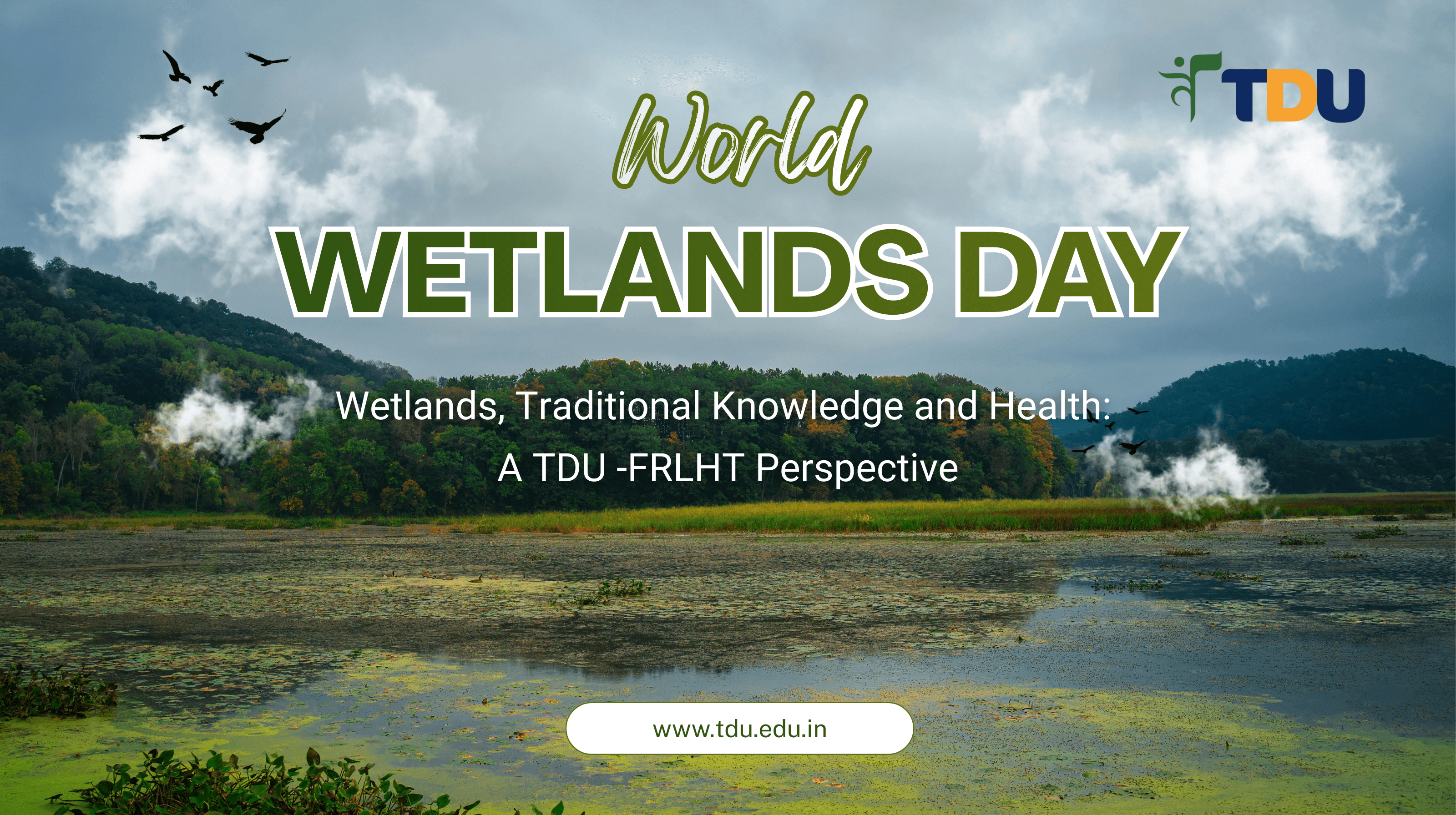
Wetlands, Traditional Knowledge and Health : A TDU - FRLHT Perspective
Wetlands are dynamic ecosystems where water meets land, creating rich habitats that support biodiversity, water security, climate resilience and cultural heritage. Observed annually on 2 February, World Wetlands Day commemorates the adoption of the Ramsar Convention (1971) and underscores the essential role wetlands play for both nature and people worldwide.
Read more
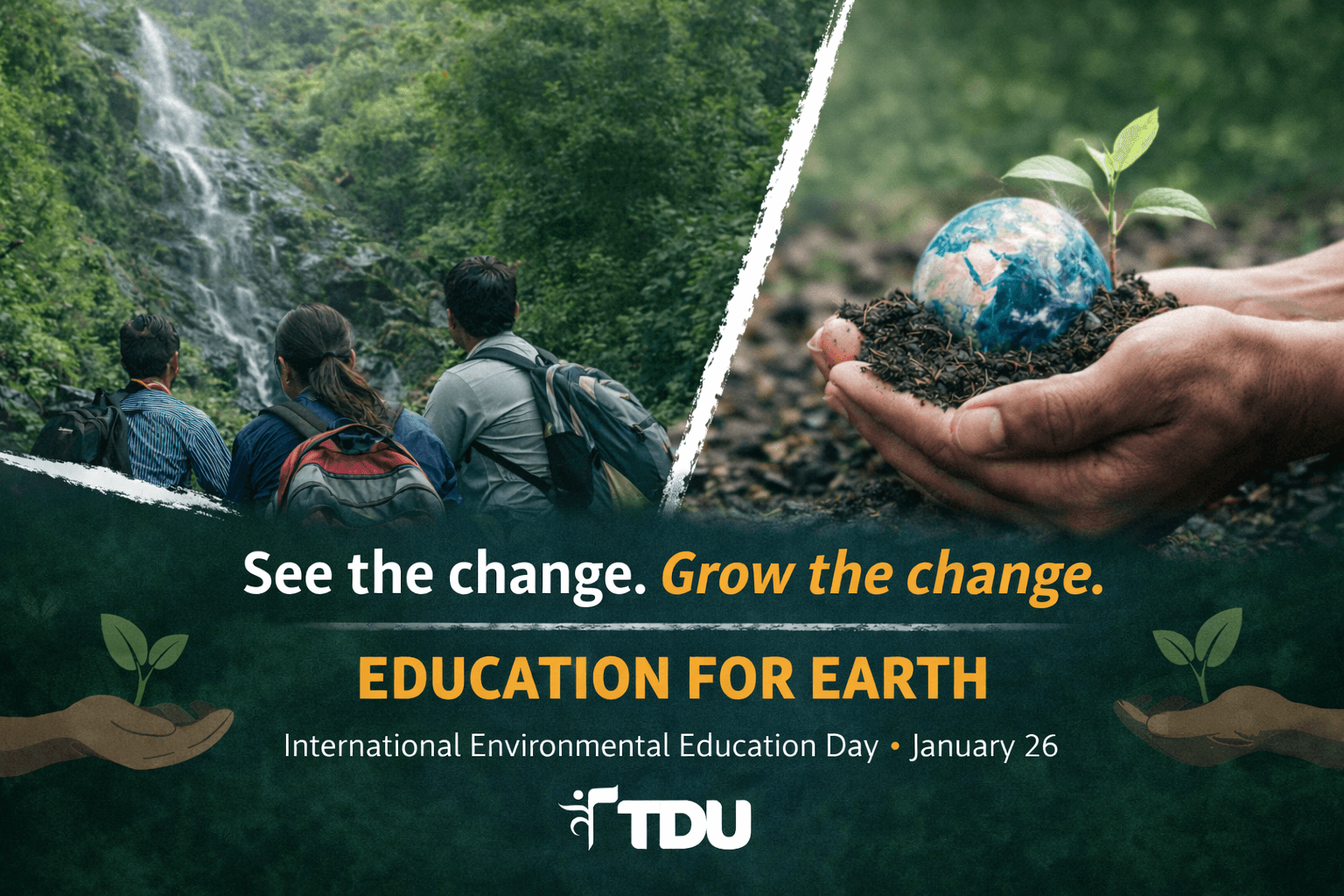
International Environmental Education Day (January 26)
On International Environmental Education Day (January 26), we are reminded of a powerful truth: The future of our planet depends on what and how we teach today.
Read more
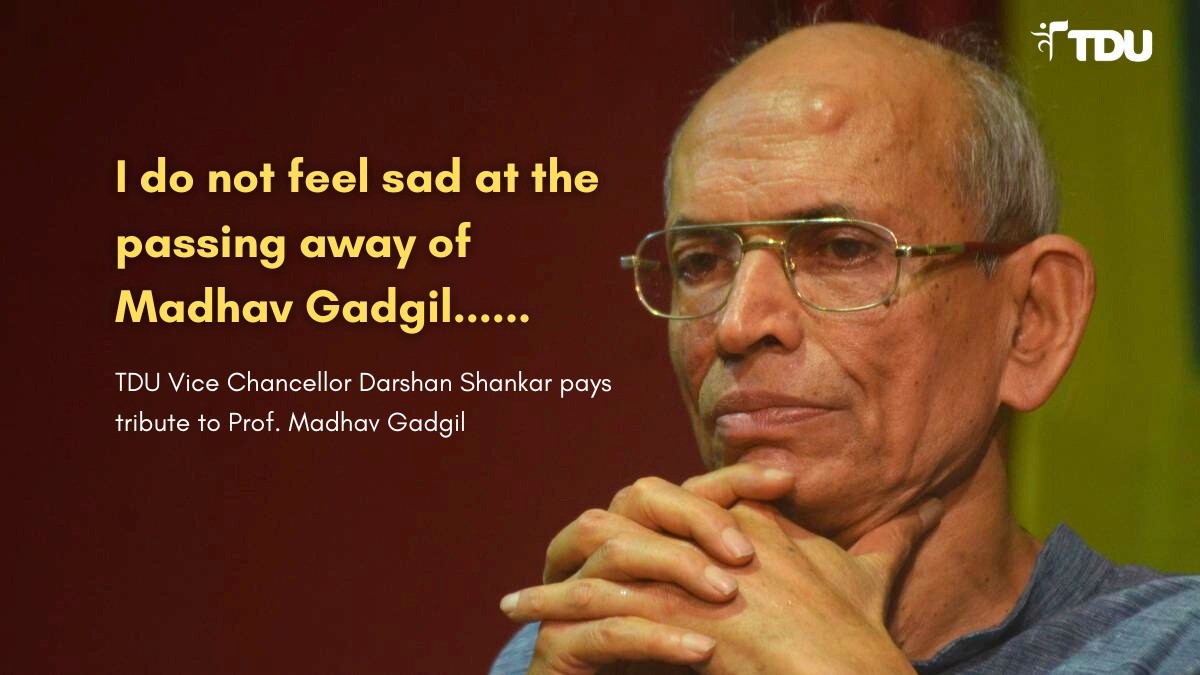
TDU VC Darshan Shankar pays tribute to Prof. Madhav Gadgil
Read more
