

Hand in Hand for Better Foods and a Better Future
Hand in Hand for Better Foods and a Better Future | The University of Trans-Disciplinary Health Sciences and Technology (TDU)
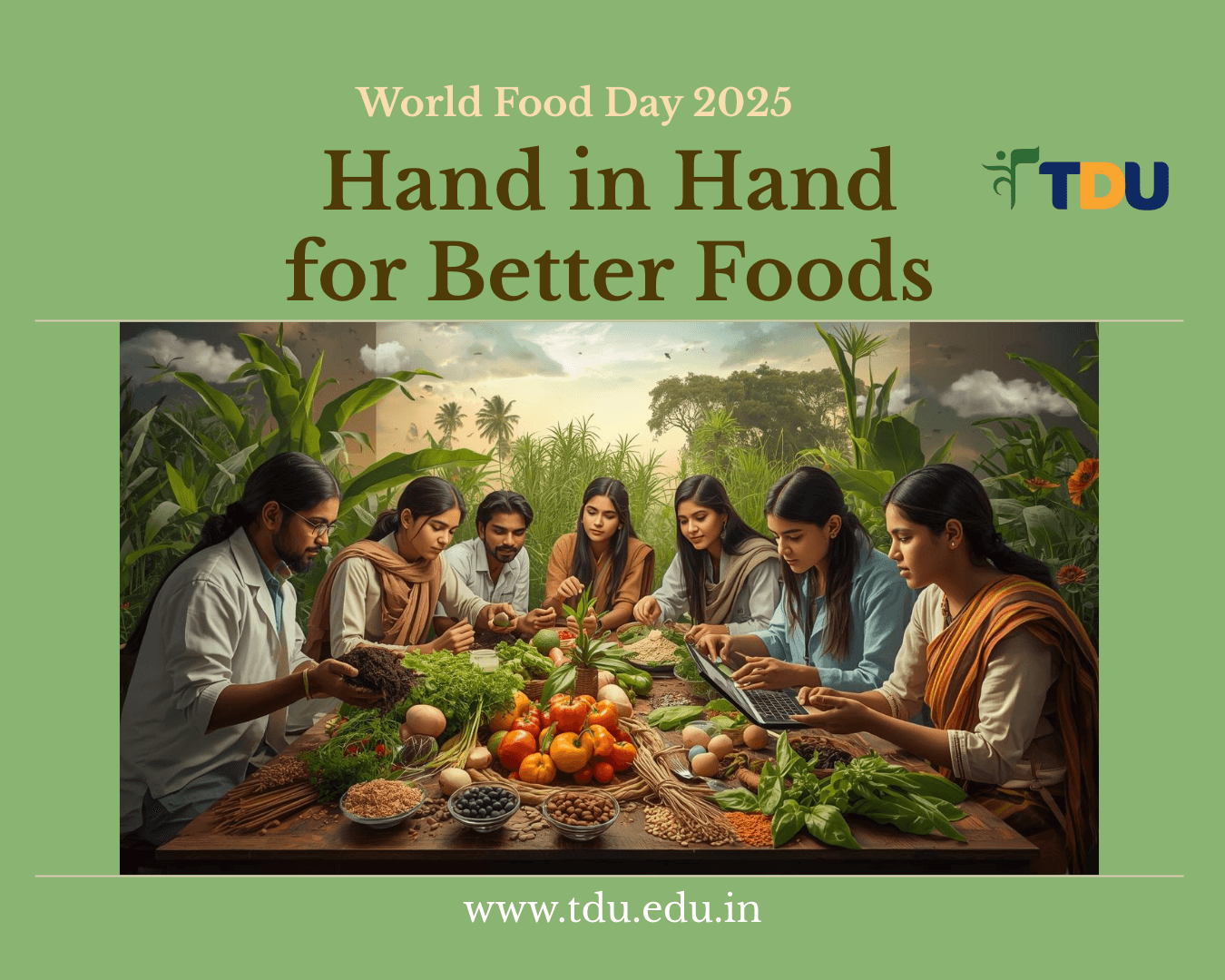
Hand in Hand for Better Foods and a Better Future
How TDU is Cultivating the Next Generation of Food Thinkers
Food is not just something we eat; it is a story we live every day.
Food connects our soil to our health, our farmers to our families, and our traditions to our future. Every grain, leaf, and seed carries generations of wisdom and care.
Yet today, that story is under pressure. Climate change, food waste, loss of biodiversity, and unsustainable farming practices are challenging the very systems that feed us.
This year’s World Food Day 2025 theme, “Hand in Hand for Better Foods and a Better Future”, reminds us that we can only solve these challenges together.
At The University of Trans-Disciplinary Health Sciences and Technology (TDU), this spirit of working hand in hand is at the heart of everything we do. Our work brings together science, culture, community, and ecology to explore one powerful idea:
Better foods lead to a better future for people and the planet.
Blending Ancient Wisdom with Modern Science
At TDU, food is more than nutrition. It is knowledge. It is medicine. It is ecology.
Our researchers are uncovering how traditional wisdom regarding food can help shape modern science.
Through studies in Ayurveda Biology, for example, we explore how classical Ayurvedic principles about seasonal diets, herbs, and balanced nutrition, align with modern discoveries in molecular biology. What our ancestors called “food as medicine” is now being decoded in the language of genetics and metabolism.
In the Functional Genomics and Bioinformatics lab, scientists study the human gut microbiome - the invisible world of microbes that influences digestion, immunity, and even mood. By understanding how traditional diets affect this ecosystem, we are discovering new ways to personalize nutrition and promote healthy aging naturally.
Our research also extends to wild edible plants, local crop varieties, and forest-based foods - many of which are vanishing from our diets. Reviving these foods is not just about preserving culture; it is about restoring resilience in our ecosystems and food systems.
Each of these projects shows how combining old and new knowledge can help create a more balanced, biodiverse, and nourishing world.
Learning Beyond Classrooms
Education at TDU isn’t confined to lectures and labs. It happens in gardens, kitchens, farms, and forests.
Students learn by doing. They grow food, visit local farms, talk to traditional healers, and work with communities. Through programs in life sciences, conservation, and nutrition, they discover how food connects everything - from soil health to mental health.
A student studying biodiversity might find herself learning about the microbes in fermented foods. A student of nutrition might research how forest foods support rural livelihoods. This blending of disciplines is what we call trans-disciplinary learning, and it is how we prepare students to think critically and act responsibly in a changing world.
By bridging modern science with traditional knowledge, our students are learning not just how to build careers but how to build sustainable futures.
Inspiring the Next Generation
Change begins with awareness, and it starts young.
That’s why TDU created the Food Futures Champions program.
This initiative invites high school students to explore the world of food through hands-on experiences. They learn how food travels from farm to table, how biodiversity supports our nutrition, and how their own food choices affect the planet.
By connecting classroom learning with real-world discovery, the program helps students see food as more than what’s on their plate - it is a story of science, culture, and care.

Learn more about the Food Futures Champions program
We’ve seen young minds light up as they identify edible wild plants, learn traditional recipes, or design ideas for reducing food waste in their schools. Each of these experiences helps plant the seeds of responsibility, because the future of food will depend on how today’s youth think, eat, and act.
From Knowledge to Action
TDU doesn’t just study or teach sustainability; we help put it into practice.
Through partnerships with industries, farmers, and public institutions, we turn research into real-world solutions. Our experts in food collaborate with entrepreneurs and start-ups to create food products rooted in Ayurveda and traditional nutrition science - from plant-based formulations to functional foods designed for modern lifestyles.
Our experts in Ethno-Veterinary Science work closely with rural communities, helping livestock farmers use safe, natural healthcare practices that reduce chemical dependency while improving food quality.
The Ecoscape initiative takes the same philosophy outdoors, transforming spaces into landscapes that promote biodiversity. These are green spaces that feed people, attract pollinators, and restore soil health - proof that sustainability can be designed into everyday life.
Through these collaborations, TDU’s work reaches beyond the campus - into communities, markets, and policies - creating ripples of positive change.
Food as the Thread that Connects Us All
Everything at TDU comes back to one idea: food connects.
It connects human health with ecosystem health.
It connects age-old wisdom with modern science.
It connects research with real life.
Whether it is decoding the gut microbiome, documenting indigenous crops, teaching students to think across disciplines, or inspiring school children to rethink their food habits, every effort at TDU points toward one shared goal - building food systems that are sustainable, inclusive, and nourishing for all.
This is the essence of a trans-disciplinary approach. It’s not about choosing between tradition and technology; it’s about bringing them together, hand in hand.
A Shared Responsibility
As we celebrate World Food Day 2025, the message from the FAO is clear: food security and sustainability are collective responsibilities. Governments, researchers, farmers, educators, and citizens all play a role in shaping a healthier planet.
TDU’s mission aligns closely with this vision. By mentoring students, engaging communities, training professionals, and consulting with partners, we’re helping bridge the gap between knowledge and action.
But the transformation of our food systems also begins with small, personal steps:

Choose local and seasonal foods.

Support small farmers.

Reduce waste.

Share knowledge.

Celebrate diversity on your plate.
These actions may seem simple, but together they create powerful change.
Hand in Hand Toward the Future
At TDU, we believe that the future of food will be written not in isolation but in collaboration - across generations, disciplines, and communities.
When scientists work with farmers, when students learn from healers, when modern labs rediscover ancient grains, and when citizens reconnect with the soil, we begin to restore balance to our food systems.
This World Food Day, let’s walk hand in hand toward better foods and a better future.
Let’s remember that every meal we share is a chance to nourish the planet as well as ourselves.
Because the story of food is, ultimately, the story of us all.
Learn more about World Food Day
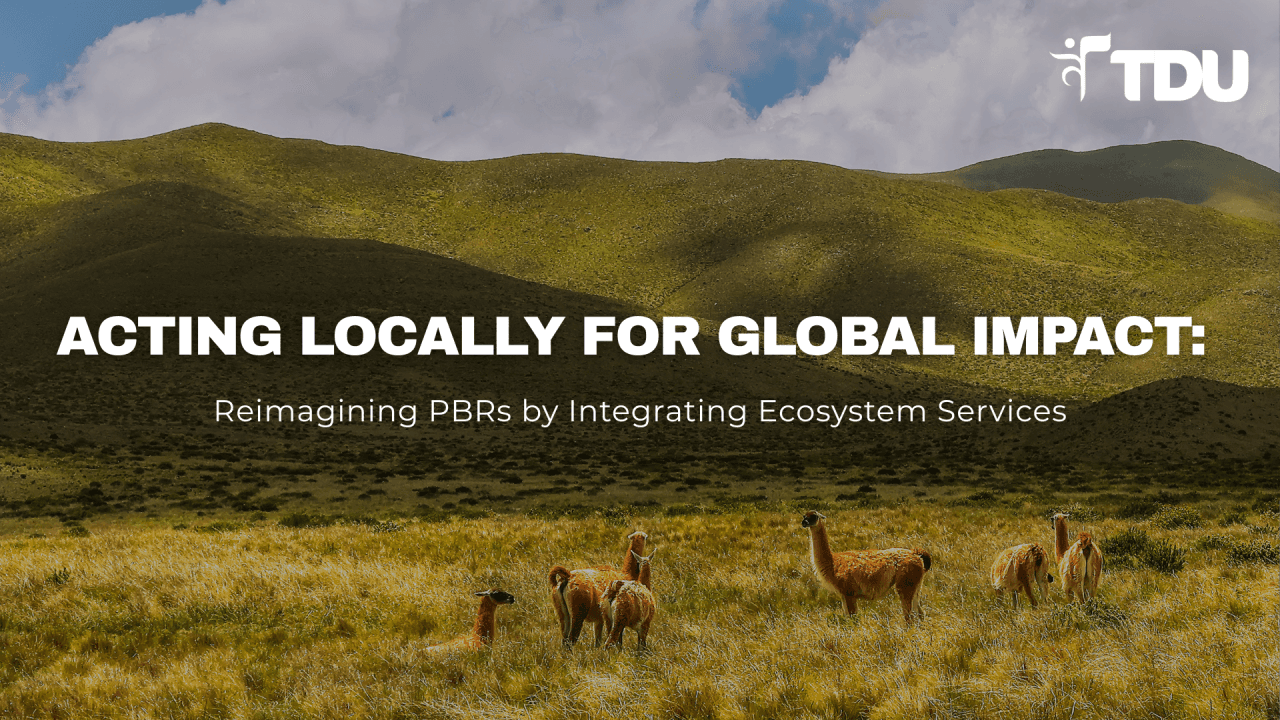
Acting Locally for Global Impact: Reimagining PBRs by Integrating Ecosystem Services
The theme of the International Day for Biological Diversity 2026—“Acting locally for global impact”—is a powerful reminder that global ecological security relies fundamentally on local ecosystems.
Read more
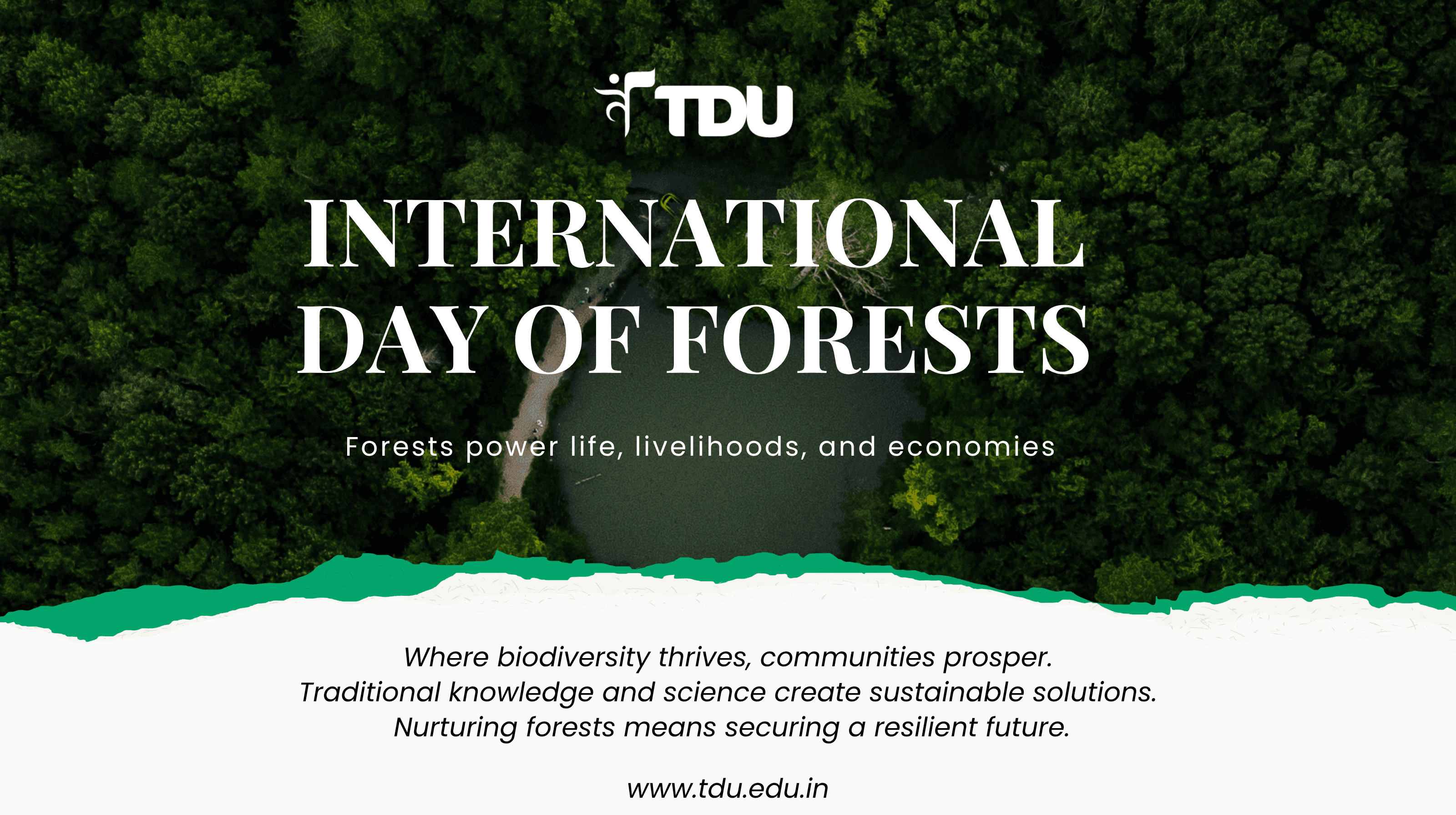
International Day of Forests 2026
Forests are not just natural assets - they are economic lifelines and knowledge systems. Nurturing them is essential for a sustainable and prosperous future for people and planet
Read more
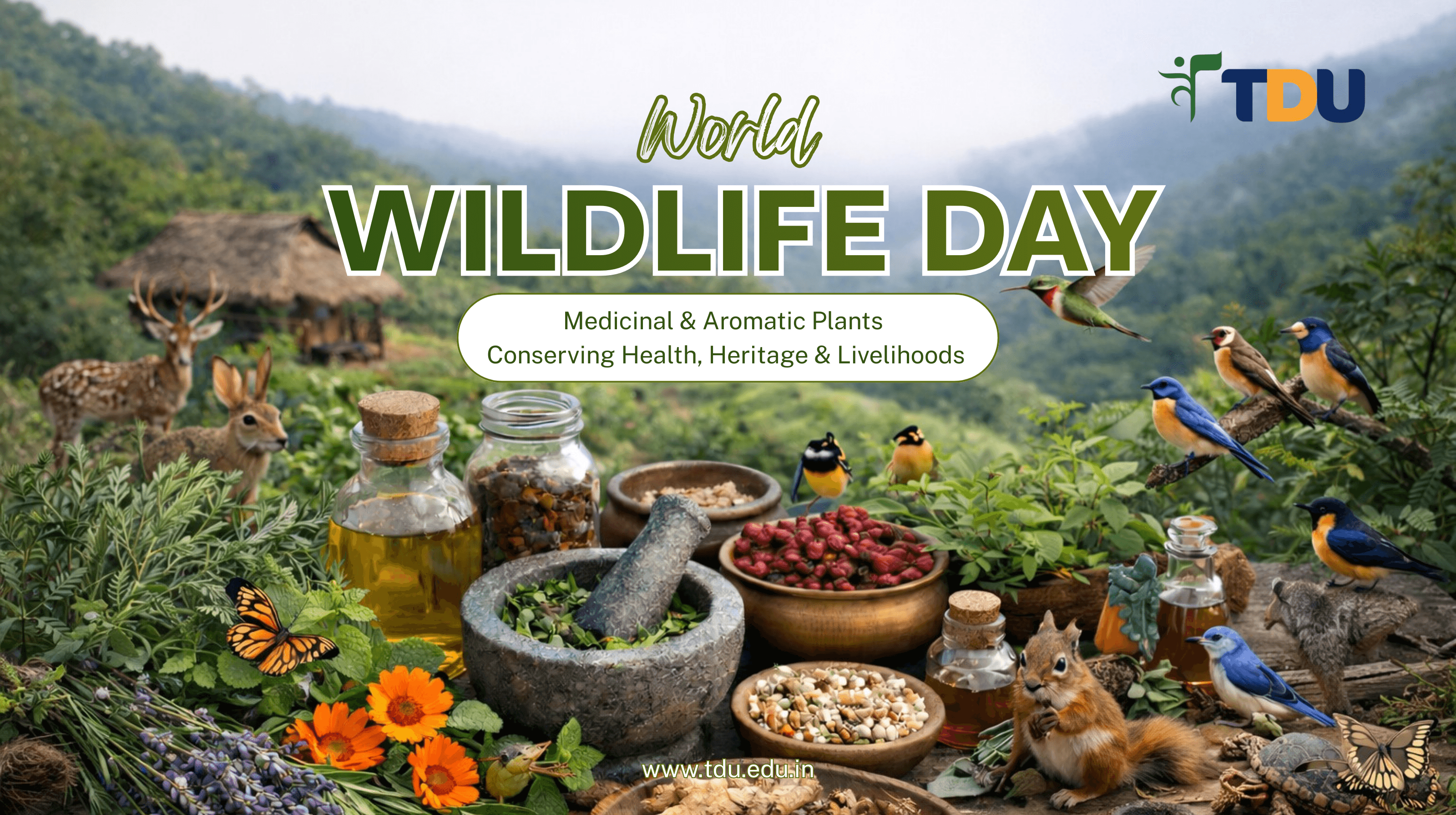
World Wildlife Day 2026
The University of Transdisciplinary Health Sciences and Technology (TDU) Calls for Action to Conserve Medicinal and Aromatic Plants for Health, Heritage and Livelihoods
Read more
Wetlands, Traditional Knowledge and Health : A TDU - FRLHT Perspective
Wetlands are dynamic ecosystems where water meets land, creating rich habitats that support biodiversity, water security, climate resilience and cultural heritage. Observed annually on 2 February, World Wetlands Day commemorates the adoption of the Ramsar Convention (1971) and underscores the essential role wetlands play for both nature and people worldwide.
Read more
International Environmental Education Day (January 26)
On International Environmental Education Day (January 26), we are reminded of a powerful truth: The future of our planet depends on what and how we teach today.
Read more
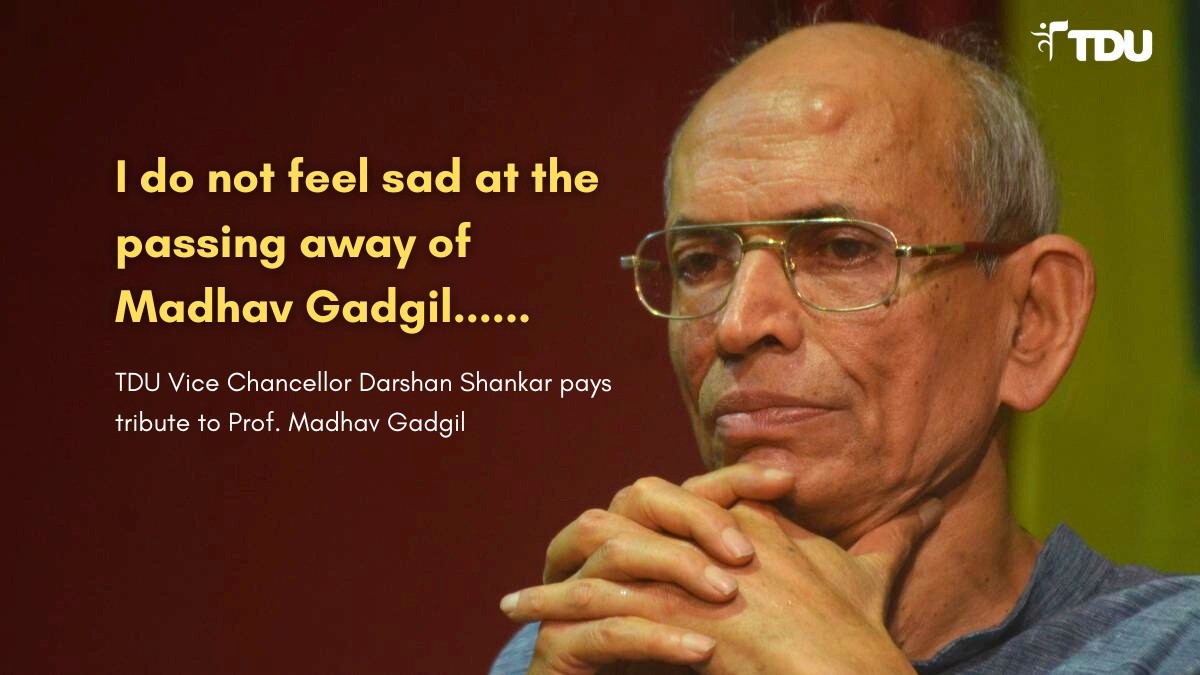
TDU VC Darshan Shankar pays tribute to Prof. Madhav Gadgil
Read more
